Showing posts with label corruption. Show all posts

Monday, December 17, 2012

Unrest marks Tunisia revolution anniversary event

Illustration by Amin

Protesters have thrown stones and tomatoes at Tunisian leaders at a ceremony marking two years since the start of an uprising that changed regimes around the Arab world. (The Miami Herald, December 17 2012; deredactie.be, December 17 2012)

It is indeed two years ago that Mohamed Bouaziz, a street vendor set himself on fire, to protest the regime of president Zine El Abidine Ben Ali. This sparked demonstrations that spread around Tunisia and several Arab countries, known as the Arab Spring.


More:

Tuesday, June 19, 2012

Nine strategies for landlocked countries

"Africa's landlocked countries are not oriented toward their neighbors. Both their infrastructure and their policies are oriented either to be completely inward-looking or toward the world market. Neighbors are just in the way of the world market, not themselves the market. And this shows up in the growth spillovers. 
In Africa, if the neighbors grow [...] it doesn't spill over. To date it has not mattered very much: usually in Africa the neighbors of the landlocked have barely been growing, so there has been precious little growth to spill over. But as things stand, even if the more fortunate countries started to grow, it would not help the landlocked." 

-- "The Bottom Billion' by Paul Collier, p. 57 - 58

So what can a landlocked country do?

Collier on "Reform"

"Reform in [failing states] has to come from within, and it takes courage. Vested interests can be relied upon to use their power, resources, and ingenuity to oppose change. Although the reformers have truth on their side, truth is just another special interest, and not a particularly powerful one. The villains willing to lie in order to defeat change have an advantage over those constrained by honesty. Reformers do not have it easy." 

-- "The Bottom Billion" by Paul Collier, p. 180

Collier on "Public Inaction"

"Our public inaction does not mean that the rich world is passive, it means that the powerful forces of globalization continue to side with the political crooks in the [bottom billion] societies." 
-- "The Bottom Billion" by Paul Collier, p. 179

Breaking the conflict trap


"It will make sense for donors to fund traditional projects to restore infrastructure, but they will need exceptionally substantial supervision both to ensure success and to guard against corruption."
"Security in postconflict societies will normally require an external military presence for a long time. Both sending and recipient governments should expect this presence to last for around a decade, and must commit to it. Much less than a decade and domestic politicians are liable to play a waiting game rather than building the peace, and firms are likely to be wary of investing. Much more than a decade and citizens are likely to get restive for foreign troops to leave the country. 
To be effective, an external presence requires troops with a mandate to fight to preserve the peace, as well as contributing governments willing to accept casualties. In return for this external security guarantee, the postconflict government should be required to radically downsize its own army. It has to learn to rule by consent rather than oppression. While the military should be reduced in size, there is likely to be a need for an expanded police force to deal with a crime wave as the violent diversify from war to crime."
-- "The Bottom Billion" by Paul Collier, p. 177 - 178

Monday, June 18, 2012

Polarizations


Will globalization improve the situation? Trade is more likely to lock the bottom billion into natural resource dependence than to open new opportunities, and the international mobility of capital and skilled workers is more likely to bleed them of their scanty capital and talent than to provide an engine of growth.


"Globalization will fix it" vs "They need more protection"
"They need more money" vs "Aid feeds corruption"
"They need democracy" vs "They"re locked in ethnic hatreds"
"Go back to empire" vs "Respect their sovereignty"
"Support their armed struggles" vs "Prop up our allies"
These polarizations are untenable, and I hope that you have picked up some sense of how quantitative research on these issues challenges them.
-- "The Bottom Billion" by Paul Collier, p. 175 and 176


Other quotes from The Bottom Billion:

More:

Saturday, June 16, 2012

Five international charters


From "The Bottom Billion" by Paul Collier, p. 139 - 156
"Five international charters - norms that I think would help reformers within the societies of the bottom billion to achieve and sustain change."
"The main point of pressure for the adoption of international standards would come from within the bottom-billion societies themselves, especially from civil society. An international charter gives people something very concrete to demand: either the government adopts it or it must explain why it won't. All societies of the bottom billion have plenty of latent opposition to bad governance. But transforming this latent opposition into effective pressure is difficult."
"Global public goods are grossly undersupplied because nobody has much interest in providing them. Being good for everybody, they face the ultimate free-rider problem. The real problem, therefore, is not that of not knowing what to do but getting around to doing it."

Sunday, March 11, 2012

Dead Aid: counter proposal


What if, one by one, African countries each received a phone call, telling them that in exactly five years the aid taps would be shut off - permanently? Although exceptions would be made for isolated emergency relief such as famine and natural disasters, aid would no longer attempt to address Africa's generic economic plight.

Would many more millions in Africa die from poverty and hunger? Probably not - the reality is that Africa's poverty-stricken don't see the aid flows anyway. Would there be more wars, more coups, more despots? Doubtful - without aid, you are taking away a big incentive for conflict. Would roads, schools and hospitals cease being built? Unlikely.

Isn't it likely that in a world freed of aid, economic life for the majority of Africans might actually improve, that corruption would fall, entrepreneurs would rise, and Africa's growth engine would start chugging?

-- Dambisa Moyo, Dead Aid

Moyo her scenario is thought-provoking. In the end, we all want to see a world that no longer depends on aid, right? That is the goal of all development, right?

Unfortunately she oversimplifies the complexity of development, measuring a country's welfare only through GDP and economic growth is shortsighted and is limiting the world to a purely economic model. Development goes much further than that.

My counter proposal is defined in the following five steps. It will demand a different view on the economic ties between Africa and the donor countries, especially where I ask to get rid of all outstanding (development) debt, but this is the only way to make the governments accountable again. Not accountable to their creditors, but to their own people.

  1. abolish all outstanding debt accumulated by loans in name of 'aid' (and their compound interest)
  2. stop putting pressure on countries to 'open their markets' or 'limit government interference'.
    If a country is interested in following this policy, it should be allowed to do so at its own pace
  3. governments should be accountable to their citizens (not to donors)
  4. aid in form of knowledge, experience and/or technology should always be provided
  5. the decision whether a project is in need of additional financial aid (outside of the local government) should be looked into on project level
More:

Friday, March 9, 2012

Dead Aid?


Dambisa Moyo, international economist and best-selling author, discusses in her book Dead Aid (2009) whether aid is actually making Africa's situation worse.

In her speech at the Brussels TEDx of 2009, she stresses that in the book she is not talking about emergency aid (like the Tsunami Relief or similar fundraisings), although even those "can be commented on", but purely about the structural aid that has been poured into Africa for decades.

If we generalize, then at this moment there are two main ideas: at one side we have aid advocates as Jeffrey Sachs (The End of Poverty) and aid critiques at the other.

The interesting part of Moyo her book is the thesis that aid is corrupting and depriving the citizens of a country to hold their (aid-dependent)  government accountable.

In a 'normal' society,  the government is responsible for upholding law and providing public goods like education, social welfare, ... but also infrastructure for roads, electricity and so forth. As these public goods are now mostly provided through aid (and as the donors provide the money, they can enforce their power and their wishes), there is hardly anything left to keep the government accountable for. Then what is the motivation for people to elect a government? It will less and less be about 'good governance' (because that is what foreign aid providers will take care off) and more and more about nepotism.

Where I don't agree with Moyo, is that the book measures a country's development purely and only in GDP and economic growth. This is a simplistic way of looking at social implications. An economist is tended to think that way, but development goes far beyond that. GDP can even give a distorted view as it does not hold the inequality ratio amongst the population into account.

It is good that the book brings aid to discussion again, it is a provocative statement and challenges us to think about the definition and goals of aid. As I agree with the necessary accountability of a government, I am fundamentally opposed to limit our observations of development to GDP and economic growth. It is oversimplifying.

But indeed, it should be carefully discussed and looked into where aid funding is needed and where not. As 'possible aid providers', we should not be paternalistic or condescending, but have a clear understanding of the needs and interests of the possible beneficiaries. It is plainly shocking that in the majority of funding programs in the West, we mostly see white, rich males explaining us why Africa should need aid and that is purely bizarre as the African intellect should be encouraged. 


Other critiques on Dead Aid:

[Moyo] ignores the fact that aid was only provided when countries meet requirements that restricted their own economy. Systematically pruning the government spending, privatizing and unmonitored opening of their markets for producers where developing countries bcan't compete with, one of the major causes for the current problems of Africa.
[...] When you want to address poverty, working on these root causes are the main assignment. If you don't do that, all the aid in the world won't have any effect on the development, but that doesn't mean that aid in itself would be useless.
 [...] Aid alone is not sufficient to solve Africa's problems. Aid is a catalyst which can enstrengthen the development. That can only happen when the right climate is present, both internal as external.
Bogdan Vanden Berghe from the Flemish umbrella organisation '11 11 11' in "Don't blame aid" (article written in Dutch)

Her alternative (more free market, more trade with Asia than with Europe and the USA, more capitalism) is not very credible. But her analysis gets down to brass tacks. Every road constructed in Africa by the World Bank (or China), every hospital being furnished or every school built with foreign money, dismisses the local potentates of their responsibilities to do it themselves and therefore maintains the corruption.
Walter Zinzen, Belgian journalist: "Stop development aid" in De Standaard (article written in Dutch)

[...] we should question the quality of "growth", because basically we have a growth model that does not work for the majority of the people in the world. What we have in the world today is called "jobless growth" and "growth without equity". 
In fact the growth that we have, particularly since the fall of the Berlin wall, when we have a surge of neoliberalism, we have seen actually virtually in every single country in the world the gap between rich and poor growing at an astronomical rate, and also the gap between rich and poor countries growing quite fundamentally. So when we talk about redifining development, we have to basically say that there are no holy cows and in that case, in that sense I think that Moyo her book is helpful as it makes a provocative statement. 
While I disagree with the conclusion of it, some of the observations are obviously helpful.
Kumi Naidoo, South African human rights activist: debate with Dembisa Moyo

Links:


in Dutch:

  • Dead Aid: Why aid in Africa doesn't work (Waarom ontwikkelingshulp in Afrika niet werkt, EcoCafe)
  • The reality is more complex than Moyo's oneliners (De realiteit is complexer dan de oneliner van Moyo, MO*Lezing, 18 September 2009)
  • Is aid responsible for the poverty in Africa? (Is ontwikkelingshulp verantwoordelijk voor de armoede in Afrika?, MO*paper, 18 September 2009)
  • Caveat for discussion on aid (De valkuil van de hulpdiscussie, MO, 26 October 2009)
  • Aid doesn't bring development (Hulp brengt geen ontwikkeling MO on MDGs, 8 September 2010)
  • Don't cut on solidarity! (Bespaar niet op solidariteit!, 11.11.11, 2 October 2009)
  • More money alone can't make us achieve the Millennium Development Goals (Meer geld alleen kan Millenniumbeloften niet inlossen, MO on MDGs, 20 September 2010)
  • Should we stop providing development aid? (Moeten we stoppen met het geven van ontwikkelingshulp?, NRC Handelsblad, 21 March 2009)
  • Market and aid need each other (Markt en hulp hebben elkaar nodig, Petra Kroon)

More:

Tuesday, February 21, 2012

Terzake: Goldman Sachs cons European Central Bank


There are English subtitles available ('CC' in bottom right).

This is a newsflash from Belgian, national television. An interview with the French economic journalist Marc Roche (Le Monde) explaining how Goldman Sachs former employees are in key positions in Italy, Greece and the European Central Bank.


More:

Wednesday, August 17, 2011

The Connection Between Corruption and the Riots in the UK

Taken from Femke Van Zeijl


Today, journalist Femke Van Zeijl (see also 'Burkina Faso Staggering?') wrote a very interesting column about the connection between Political Corruption and the current riots in London.

Although the analysis is simple, it tends to be forgotten very often:


Monday, August 8, 2011

Riots in England


Are the current riots in England rooted into a social problem? (radio interview in Dutch)


Music: Panic by The Smiths


Update 11th August: Ten explanations for the riots in England (BBC)


Update 12th August:
Dismissing rioters as mindless is futile rhetoric. However unacceptable the UK riots, we need to ask why they are happening
--Russell Brand (The Guardian)

Update 17th August: The Connection Between Corruption and the Riots in the UK by Femke van Zeijl

Tuesday, April 19, 2011

Corruption, open standards and chocolate!

It's quite a collection, but still, this is what I read at the breakfast table this morning, handpicked from the several blogs I follow. The subjects are as far from each other as my musical taste and Britney Spears, so I will just give it to you as a list of links:

Friday, April 1, 2011

Burkina Faso staggering?

Picture taken from Femke van Zeijl
Last week, my friend Martin who lives in Ouagadougou sent me a nice email but ended with the words: "Greetings from a staggering Burkina"

Staggering Burkina? Did I miss something? I don't watch the news here on Ghanaian television, but I keep myself up to date on world news through the BBC and the Belgian VRT. Readers will have noticed that I am very much caught up in the unrest in the Middle-East, but how come I don't even know about trouble less than 200 kilometers north of Tamale?

I rechecked all the RSS-feeds I am following and there is nothing, nothing about Burkina Faso. So I had to ask Martin: What the hell is going on?

Monday, February 21, 2011

Overview Middle East protests

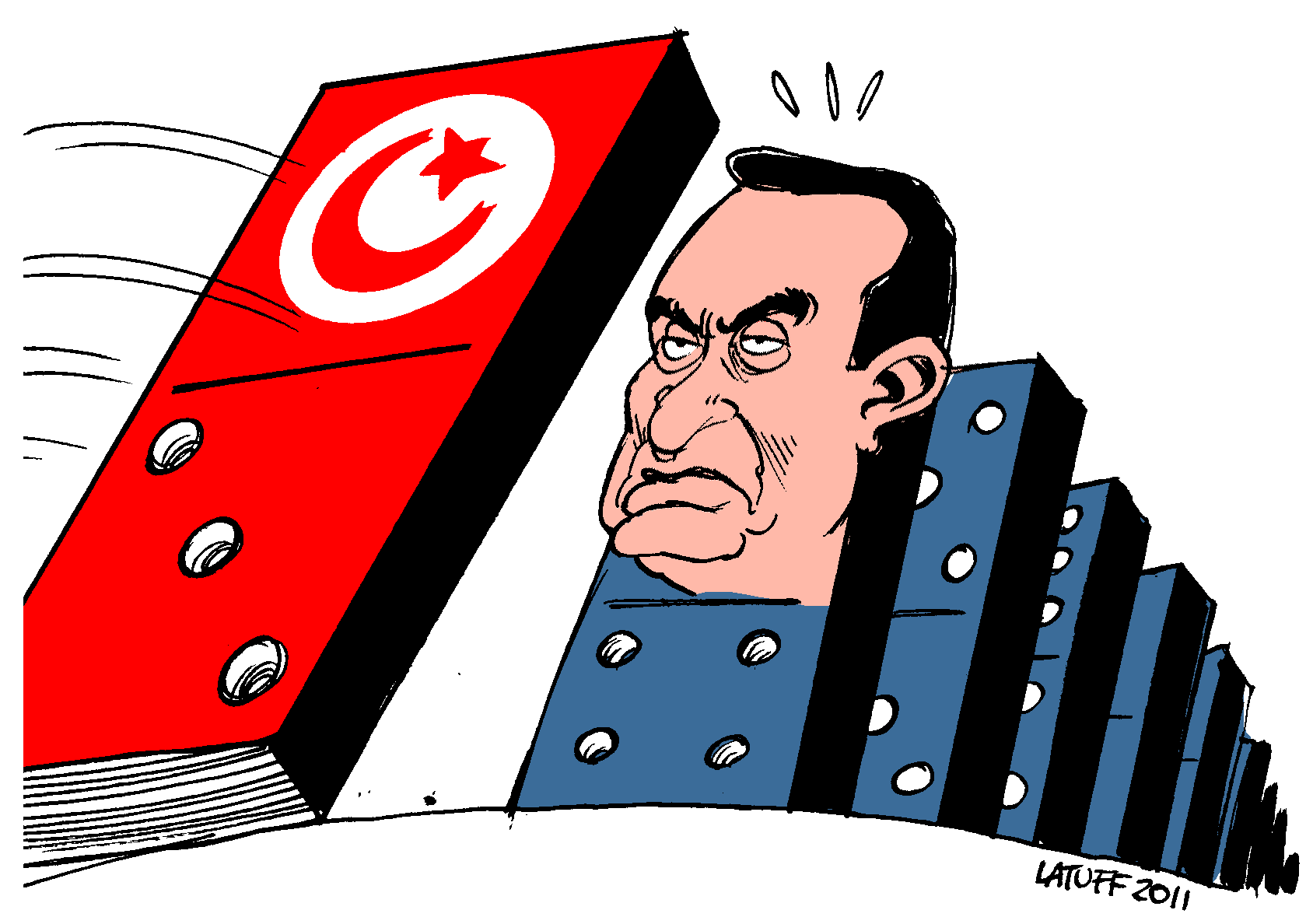
Illustration by Carlos Latuff

"The power of dictatorships comes from the willing obedience of the people they govern - and that if the people can develop techniques of withholding their consent, a regime will crumble."
--The nonviolent revolution rulebook


The Jasmine Revolution (WP 1, WP 2; BBC Live and Arabisch protest in Dutch), an overview:

Sunday, February 20, 2011

Revolutionary times

Illustration by Amin

Being a child of the eighties, I always wanted to have experienced the turbulent sixties. Even since I was a young boy, I was looking up to all those pictures of people striding for freedom, turning Europe and America upside down: the Prague Spring, American civil rights movement, the protest against the Vietnam war, the student barricades in Paris, ...

Related Posts Plugin for WordPress, Blogger...